

What should a Dubai villa owner survey before approving a renovation design?
A Dubai villa owner should verify the existing building, structure, services, drainage, damp risks, slab levels, ceiling voids and authority drawing record before design is frozen. This matters most for older villas, extended villas, inherited properties, and homes where previous alterations may not match approved drawings or visible site conditions.
This guide concerns private villa renovation in Dubai and UAE luxury residential projects, not apartment fit-out and not new-build construction. The controlling route can change by location: Dubai Municipality areas, DDA-regulated master communities, free-zone areas and community management rules can each affect what must be checked before design, pricing and submission.
The Dubai villa pre-design survey is a risk register, not only a measurement exercise
The first serious cost-control step is not a mood board or a contractor quote. It is a whole-villa discovery survey that turns hidden conditions into named risks before the owner approves a layout, a budget or a permit path.
-
Structure: hidden beams, altered columns, removed walls, roof changes, slab penetrations and unrecorded extensions can affect whether a proposed open-plan layout is buildable.
-
MEP services: electrical distribution boards, AC routes, plumbing lines, pumps, water heaters, condensate drains and service shafts should be traced before the design promises new kitchens, bathrooms, lighting scenes or smart controls.
-
Drainage: buried pipes, manholes, inspection chambers and poor falls can limit where wet rooms, kitchens, pools or outdoor majlis areas can move.
-
Building condition: damp, cracks, leaking balconies, roof defects, façade movement, uneven floors and weak waterproofing can damage luxury finishes if the design ignores them.
-
Spatial constraints: slab steps, low ceiling voids, narrow risers and external level changes can decide whether AC ducts, recessed lighting, curtains, pergolas and landscape drainage actually fit.
Dubai Municipality lists Building Permits Procedures for residential villas, industrial buildings, multi-storey buildings and public buildings, and its building permit procedures cover technical inspections of under-construction sites in Dubai where those procedures apply. A renovation survey should therefore prepare the project team to design around real site conditions, not only around presentation drawings.
The Dubai villa owner should separate visible defects from approval-critical unknowns
Visible defects still matter, but not every defect changes the authority route. A stained wall, scratched marble or tired joinery may affect the finish budget. An undocumented extension, façade alteration, structural opening, service relocation or drainage change can affect design feasibility, sequencing, contractor responsibility and approvals.
-
Approval-critical unknowns: mismatched approved drawings, past extensions, façade changes, wall removals, slab openings, roof additions, new external structures, MEP capacity limits, drainage rerouting and changes to villa access or plot works.
-
Pricing-critical but usually finish-led items: damaged flooring, dated sanitaryware, chipped stone, worn cabinetry, paint failure, door hardware, decorative lighting, loose skirting and minor surface defects.
-
Survey outputs before concept design: measured plans, level notes, ceiling and void observations, service locations, visible structural constraints, defect photographs and a risk register.
-
Survey outputs before detailed design and pricing: confirmed drawing record, opening-up requirements, specialist inspections, MEP tracing notes, drainage observations, access constraints and clear assumptions for contractor quotations.
DDA states that an approved Building Modification - Design is valid for 6 months after approval where that DDA service applies, which is another reason not to rush a premature design submission before the villa evidence is stable. The next control point is the drawing file itself: which existing drawings and authority records should be checked for a Dubai villa renovation?
What should a Dubai villa owner survey before approving a renovation design shown as an editorial reference for proportion and finish coordination.
Which existing drawings and authority records should be checked for a Dubai villa renovation?
The Dubai villa owner should obtain and compare approved drawings, completion records where available, community rules and prior modification approvals before layouts are redrawn, because the relevant path may sit with Dubai Municipality, DDA, a free-zone authority or a community manager for that specific villa location.
| Record to check | Why it matters before pricing or design approval | Authority note |
|---|---|---|
| Approved architectural, structural and MEP drawings | Old plans must be tested against the built villa before walls, openings, ceilings, kitchens or wet areas are redesigned. | DDA Building Modification - Design requires approved stamped drawings and proposed drawings highlighting changes, with architectural, structural and mechanical drawings referenced. |
| Completion certificate and permit history | Completion and permit records help the design team understand whether the villa is being altered from an approved baseline or from an undocumented condition. | Dubai Municipality Building Permit Procedures cover Building Permits and Completion Certificates under procedures intended to apply quality standards and approved specifications for building safety. |
| DDA design and permit route, where applicable | A completed villa in a DDA-regulated area may need design review before the contractor permit stage. | DDA states that Building Modification - Design is available after the completion certificate, with the consultant as requester and stamped drawings as the deliverable. DDA’s Building Modification - Permit is also for completed building projects, with the contractor as requester and a Building Modification Permit as the deliverable. |
| Community and free-zone approval route | Developer-controlled or free-zone communities can add their own NOC path, access controls and façade restrictions. | The villa owner should confirm the exact authority and community manager for the plot before the contractor prices the work. |
Approved drawings should be compared with the Dubai villa as-built condition
Approved drawings are a starting point, not a site truth. The survey team should compare wall positions, stair widths, ceiling drops, shafts, roof access, external levels and service routes against the drawings before the interior designer freezes a plan. If the drawing shows a clean wall but the villa contains a concealed riser, beam drop or modified opening, the design risk has already moved from paper to site.
Dubai Municipality’s permit procedure page also notes file controls for downloadable procedure documents, including a maximum size of less than 40 MB for listed PDF and MS Office formats. That small administrative detail is a reminder that renovation records must be collected, named and controlled before they are relied on in submissions or tender packs.
Past villa extensions and façade changes can change the approval route
Past extensions, façade revisions, structural openings, service relocations, boundary works and roof additions should be marked as “verified,” “not verified” or “requires authority check.” In DDA areas, the online Building Modification - Design process includes creating a Building Modification project, selecting the Design application, uploading documents, paying fees and receiving feedback. DDA lists online access as 24/7 for the related Building Modification - Permit application and gives an estimated delivery time of 2 working days for that permit service, subject to the DDA process and feedback.
DDA also lists required permit documents such as an appointment letter signed by owner, consultant and contractor, plus a site mobilization layout if applicable. DDA states Building Modification - Permit fees include AED 1.0 per ft2 for total additional or relevant built-up area, renewal at AED 200 for 3 months up to one year from permit issuance, and Knowledge Dirham and Innovation Dirham charges per transaction.
Community NOCs should be checked before the Dubai villa scope is priced
Community NOCs affect more than paperwork. Contractor registration, delivery access, working hours, neighbour protection, façade colour, pergola visibility, boundary works and site mobilization can all change the sequence and assumptions in a quotation. DDA’s Construction Permits and NOCs page lists Building Modification - Permit among its services, and also lists categories that may become relevant where works involve mobilization, excavation, demolition, maintenance, temporary construction, right-of-way work, dewatering, night shift work or site suspension.
Which existing drawings and authority records should be checked for a Dubai villa renovation shown as an editorial reference for proportion and finish coordination.
The record check should therefore end with one practical question: what does the existing villa actually allow the design team to draw next, and what should a measured survey capture before interior design starts?
What should a measured survey capture in a Dubai villa before interior design starts?
A measured survey for a Dubai villa should capture walls, columns, openings, ceiling heights, floor levels, stair dimensions, roof access, external levels and service zones accurately enough for design coordination before luxury joinery, stone, glazing, kitchens, bathrooms, lifts, majlis features or ceiling-heavy interiors are specified.
-
Approve layouts only after dimensions are checked on site: old villa drawings can guide the team, but measured plans, elevations, sections and discrepancy notes should control the live design model.
-
Approve budgets only after level risks are visible: slab steps, bathroom falls, terrace thresholds and stair geometry can change finishes, waterproofing build-ups and door details.
-
Approve ceiling concepts only after voids are opened or measured: AC ducts, access panels, lighting, curtains, smart cabling and bulkheads need real space, not optimistic sections.
-
Approve outdoor scope only after external levels and services are mapped: manholes, gullies, irrigation points, pool equipment zones and boundary conditions can redirect the design.
Dubai villa floor levels and slab steps should be surveyed before layouts are approved
Floor-level survey notes should mark room-to-room steps, stair landings, bathroom set-downs, external thresholds, balcony levels and any patched slab areas. A villa owner may see one continuous marble floor in a concept image, but the site may need ramps, trims, thicker build-ups or a changed threshold detail.
Wet rooms need special caution because drainage falls, waterproofing build-ups and door undercuts all compete for height. If a bathroom, kitchen or laundry moves, the measured survey should identify nearby slab levels and likely service paths before the designer promises a flush floor or a concealed drain.
Luxury stone flooring also rewards early measurement. Existing stone worth retaining should be photographed and mapped, because replacement, polishing and protection decisions affect sequencing. For natural stone maintenance, the Natural Stone Institute warns that scouring powders or abrasive creams can scratch stone surfaces where honed or polished finishes are relevant.
Accessible or age-friendly planning also starts with measured space, not furniture mood boards. Where accessible design references are used for clearances, the U.S. Department of Justice 2010 ADA Standards for Accessible Design specify a 30 by 48 inch clear floor or ground space for wheelchair positioning, and set accessible dining and work surfaces at 28 to 34 inches above the finish floor or ground.
Dubai villa ceiling voids should be measured before AC, lighting and smart systems are designed
Ceiling surveys should record finished ceiling heights, slab soffit levels where visible, bulkhead depths, access hatch locations, curtain pocket zones, AC grilles, duct routes, fan coil or equipment access and conflicts above feature ceilings. A ceiling design that ignores these items can look calm on a render and fail during coordination.
What should a measured survey capture in a Dubai villa before interior design starts shown as a planning reference for layout, scale, and material decisions.
Interior design teams should ask for reflected ceiling references, photos above accessible hatches and notes on areas that need opening-up before final approval. This matters most in majlis ceilings, double-height spaces, corridors packed with services, kitchens with extraction requirements and bedrooms planned with concealed lighting and smart controls. For AC-heavy upgrades, the survey should connect with villa AC replacement checks before ceilings are finalised.
External villa levels should be checked before landscape, pool or pergola work is included
External measured surveys should capture boundary walls, gates, driveway falls, garden levels, drainage gullies, manholes, irrigation points, outdoor electrical routes, pool equipment areas, roof access points and finished floor relationships at doors. Outdoor work is not only planting and furniture; external levels decide whether water moves away from the villa or back toward expensive finishes.
Pool and water-feature planning should also separate private design preference from safety and operation. Where a design team chooses to use public-venue health and safety guidance as a conservative benchmark, the Centers for Disease Control and Prevention states that the Model Aquatic Health Code provides voluntary guidance for preventing injury and illness at public aquatic venues.
Landscape, pergola, pool and outdoor majlis ideas should therefore be checked against service routes and external levels before the quotation is treated as reliable. For larger garden scopes, outdoor majlis, pool and landscape services coordination should sit beside the measured survey. Once geometry is known, the next risk is condition: which defects must be inspected before a Dubai villa renovation budget is trusted?
Which condition defects should be inspected before a Dubai villa renovation budget is trusted?
A Dubai villa condition survey should check damp, waterproofing failure, roof leaks, settlement cracks, concrete deterioration, corroded metalwork, façade defects, timber decay, pest damage and failing finishes before the budget is trusted. These findings matter when premium finishes could conceal unresolved moisture or movement problems.
Damp and waterproofing defects in Dubai villas should be resolved before luxury finishes are specified
Damp is the defect that turns a beautiful renovation into a repair project. A survey should check roofs, balconies, bathrooms, planters, external walls, AC condensation routes and landscaped edges where water can enter, collect or migrate behind finishes.
Moisture checks should not stop at a visual stain. The survey team may need moisture readings, thermal imaging where suitable, controlled opening-up, flood testing of wet areas or roof terraces, and inspection of failed sealants and drainage outlets. The U.S. Environmental Protection Agency guide to mold and moisture states that condensation and wet or damp spots should be fixed promptly to prevent mold growth, in residential moisture-control planning for areas such as bathrooms, closets, laundry rooms and exterior walls.
Luxury stone, veneer, wallpaper, joinery and concealed lighting details should be specified after the damp source is understood, not before. A contractor allowance for “making good” is not a diagnosis.
Cracks in a Dubai villa should be classified before walls or ceilings are altered
Cracks should be recorded by location, direction, width appearance, recurrence and surrounding symptoms before demolition or ceiling changes begin. The practical question is not whether a crack looks serious in a photo; the practical question is whether the crack reflects shrinkage, settlement, thermal movement, poor previous work or a structural concern.
A qualified engineer may need opening-up or structural assessment where cracking aligns with beams, columns, slab edges, stair openings, façade junctions or undocumented alterations. For layout changes, owners should treat crack classification as part of the same decision path as structural checks before removing villa walls in Dubai, rather than as a cosmetic snag list.
Existing roofs, balconies and façades should be checked before exterior design is frozen
Exterior upgrades should follow a survey of roof membranes, parapets, outlets, balcony falls, façade render, cladding, window seals, external doors, pergola connection points and corroded metalwork. These areas decide whether a new terrace finish, façade treatment, glazing upgrade or shaded seating zone is a design scope or a repair scope first.
The condition report should separate confirmed defects from suspected defects that need specialist testing. That distinction protects the budget, because the next question is not only what the villa looks like, but how hidden MEP services, utilities and drainage will behave when the design starts moving rooms and wet areas.
Which condition defects should be inspected before a Dubai villa renovation budget is trusted shown with floor, wall, and fixture relationships visible.
How should MEP, utility tracing and drainage surveys be handled in a Dubai villa?
MEP and drainage surveys for a Dubai villa should trace electrical routes, DBs, water supply, pumps, tanks, AC equipment, duct routes, condensate lines, drainage stacks, manholes and external services before the layout is priced. This matters most when kitchens, bathrooms, AC systems, EV charging, pools or outdoor kitchens are being moved or added.
Dubai villa electrical capacity and DB condition should be checked before new loads are promised
The electrical survey should start at the existing distribution boards, visible cable routes, isolators, earthing points, outdoor supplies and spare ways. A luxury brief often adds heavier kitchen equipment, extra AC, pumps, garden lighting, automation panels or EV charging, but a design promise is weak until the existing electrical condition has been inspected.
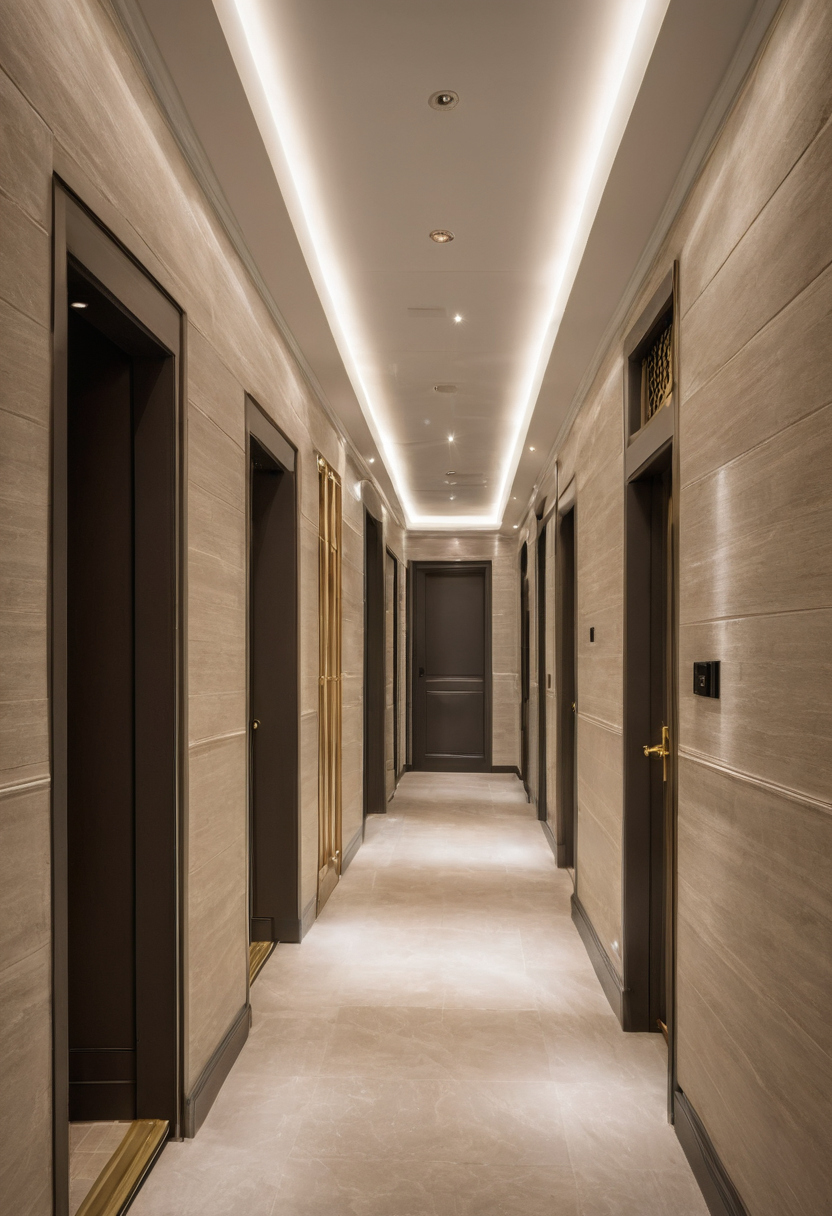
How should MEP, utility tracing and drainage surveys be handled in a Dubai villa shown with finish, fixture, and clearance relationships visible.
The owner should ask the design and MEP team to mark which proposed loads are confirmed, which need engineering review and which may affect authority or utility coordination. DEWA’s Getting Electricity Connections page is the official reference to discuss with the appointed consultant or contractor where additional load or connection coordination may apply. For planning context on larger electrical changes, see Karamna’s guide to DEWA load upgrades for villa renovations.
Dubai villa AC equipment, ducts and condensate routes should be surveyed before ceilings are designed
The AC survey should record equipment positions, duct runs, return-air paths, grille locations, controls, drain routes and maintenance access before reflected ceiling plans are approved. Ceiling design is not only a gypsum and lighting decision; it is also a services decision. A low feature ceiling can become expensive if ducts, condensate falls or access panels were assumed rather than verified.
Coordination should include existing chilled-water or DX equipment where present, visible pipework, insulation condition, control wiring and the practical route for any new indoor units. For the design impact of HVAC decisions, read villa AC replacement checks before ceilings are finalised.
Dubai villa drainage should be CCTV-inspected before wet rooms and kitchens move
The drainage survey should confirm pipe routes, manholes, stack positions, blockages, cracks, backfalls and connections before bathrooms, laundries, kitchens or outdoor kitchens are relocated. If drainage is guessed from old plans, the quotation may miss breaking works, rerouting limits or repair scope below finished floors.
Wet-area finish planning should also reflect maintenance reality. For natural stone floors, walls and counters, the Natural Stone Institute recommends cleaning with neutral cleaners, stone soap, or mild liquid dishwashing detergent and warm water where those materials are used in residential surfaces: Natural Stone Institute care guidance. The next control is to convert these findings into quotation assumptions, design holds and the permit strategy before the villa scope is frozen.
How should Dubai villa survey findings control the design brief, contractor quotations and permit strategy?
The Dubai villa survey findings should become a written pre-design risk register, not a folder of unconnected observations. The design team should use that register to mark exclusions, provisional items, opening-up requirements, permit triggers, MEP redesign needs and quotation assumptions before the owner signs a contractor price or approves the concept.
The Dubai villa quotation should state what was surveyed and what remains hidden
A credible villa quotation should separate fixed scope from unknown scope. Fixed scope is work that the contractor can price from verified drawings, inspected areas and agreed specifications. A provisional item is work expected but not fully measurable yet, such as drainage repair after CCTV findings or ceiling works after AC routes are exposed. A contingency allowance is a client-held risk amount, not a substitute for missing survey work. An excluded specialist investigation is a task that still needs a qualified party before the price can be relied on.
The quotation assumptions should be blunt: existing drainage is assumed reusable, ceiling voids are assumed adequate, no hidden structural steel is assumed, existing electrical capacity is assumed unchanged, or existing waterproofing is excluded until opened. Clear wording does not remove risk, but it shows where the risk sits.
The Dubai villa design programme should include opening-up and specialist surveys before final approval
Some risks cannot be solved by a visual walk-through. The design programme should allow controlled opening-up before final layouts, procurement or authority submission. Typical checks include ceiling void inspection, AC duct condition, bathroom waterproofing exposure, structural probes where walls or slabs are affected, drainage exposure at key manholes and service tracing before demolition.
Occupied villas and gated communities need careful sequencing. Intrusive checks should be planned around access, dust control, temporary protection, service isolation, working hours and any community procedures that apply to contractors entering the site.
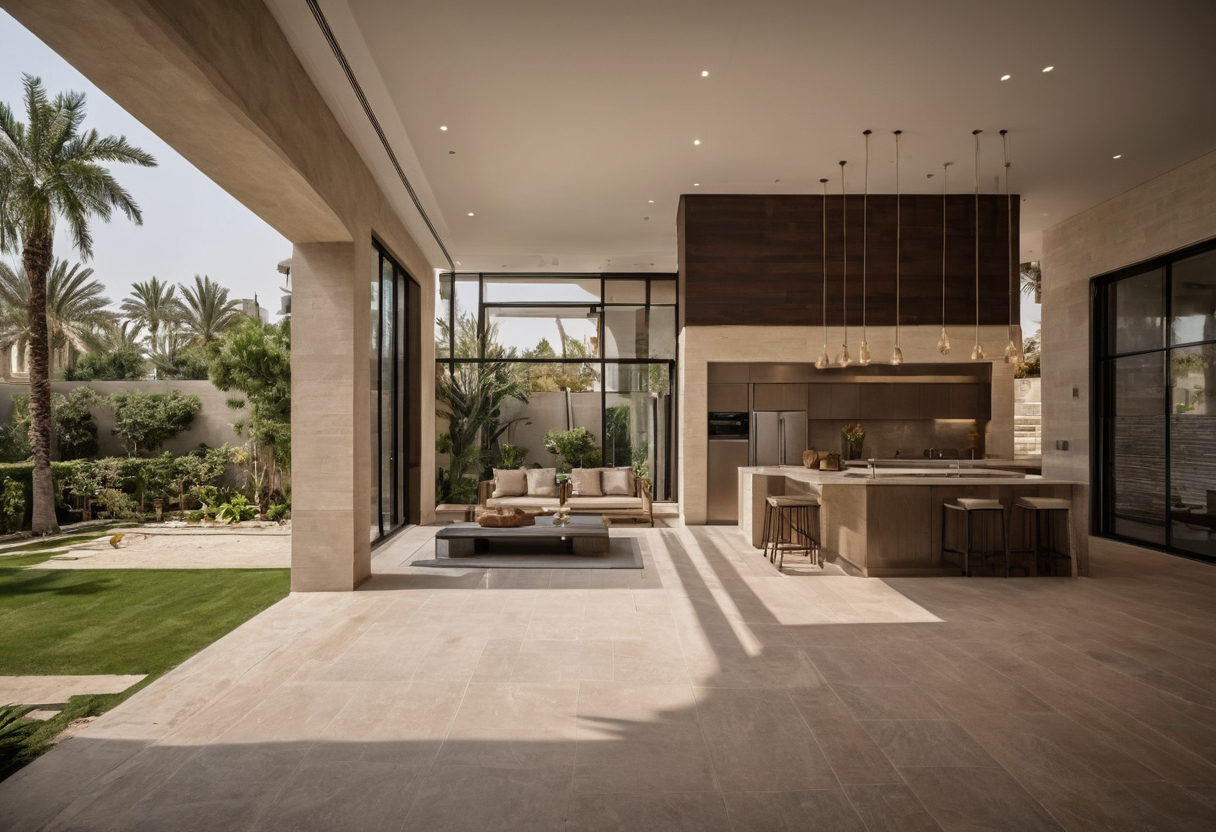
How should Dubai villa survey findings control the design brief, contractor quotations and permit strategy shown with floor, wall, and fixture relationships visible.
The Dubai villa permit route should be checked after survey findings, not before them
The permit strategy should follow the discovered scope. A villa that begins as “interior refresh” may become MEP-heavy if new loads, wet-area moves or AC rerouting appear. A façade change, undocumented extension, structural opening, drainage change or external pergola can shift the approval path and NOC sequence.
The practical decision is simple: do not freeze the luxury design first and explain the building later. Freeze the survey register, then freeze the design, the quotation and the permit route around what the villa actually contains.

About Karamna Design Review
Editorial coverage of interior design, luxury majlis, and villa renovation across Dubai and the wider UAE.